Before buying shampoo, conditioner or a styling product, check the exact product, the individual seller…
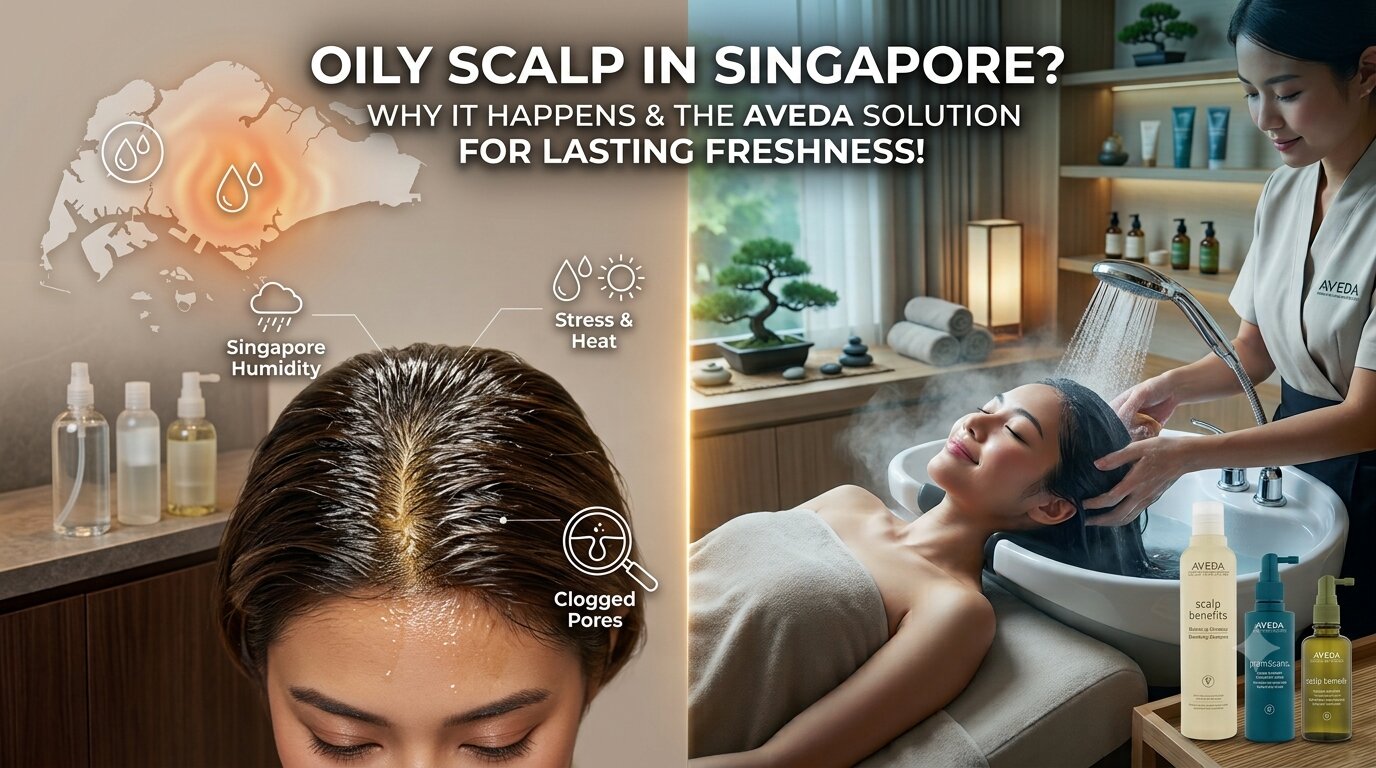
Oily Scalp in Singapore? Why It Happens and How Aveda Scalp Care Can Help You Feel Fresh
Quick answer: Oily scalp in Singapore is primarily driven by year-round heat and humidity, which accelerate sebum production. Frequent temperature shifts between outdoor heat and air-conditioned spaces compound the problem. Regular professional scalp cleansing with botanical formulations, combined with good home care habits, can help manage oiliness — though persistent or severe cases warrant a dermatologist’s assessment.
You wash your hair in the morning and by early afternoon, your scalp already feels greasy. Sound familiar?
For many people living in or visiting Singapore, this is not a reflection of poor hygiene — it is a predictable physiological response to one of the most demanding climates a scalp can encounter. Year-round heat, near-constant humidity, air-conditioned interiors, and regular physical activity create conditions that virtually guarantee accelerated sebum production. The oily scalp is not a personal failing. It is a climate problem.
This article explains why it happens, what makes it worse, and what combination of home care habits and professional cleansing can help you feel genuinely fresh — without stripping your scalp or falling for products that over-promise.
Why Is Oily Scalp So Common in Singapore’s Climate?
Singapore sits just one degree north of the equator. Average daily temperatures range between 25°C and 32°C throughout the year, and relative humidity typically hovers between 70% and 90%. These conditions are not incidental to scalp oiliness — they are a direct cause of it.
The scalp contains a high density of sebaceous glands, which produce sebum — the natural oil that protects and moisturises the scalp and hair. Heat accelerates sebaceous gland activity. In a warm, humid climate, those glands are effectively operating on high output all day, every day.
The challenge is compounded by Singapore’s built environment. Most Singaporeans move repeatedly between outdoor heat and heavily air-conditioned offices, shopping malls, and transport systems throughout the day. These rapid temperature shifts can confuse the scalp’s natural regulation mechanisms, leading to overproduction as it attempts to compensate.
For physically active individuals — runners, gym-goers, cyclists — sweat adds another layer. Sweat itself is not the primary cause of oily scalp, but it can mix with sebum and product residue at the scalp surface, creating a coating that makes hair feel heavy and dull more quickly.
Does Washing More Often Make an Oily Scalp Worse?
This is one of the most common questions people ask — and the honest answer is: it depends on how you wash, not just how often.
The concern behind the question is legitimate. Stripping the scalp repeatedly with harsh, detergent-heavy shampoos can disrupt the scalp’s natural moisture balance, prompting sebaceous glands to produce more sebum as a compensatory response. Over time, this can create a cycle where more washing appears to cause more oiliness.
However, this effect is most associated with very aggressive cleansing products or extreme washing frequency — not with regular washing using gentle, balanced formulations.
For most people with oily scalps in Singapore’s climate, washing every day or every other day is entirely appropriate — provided the shampoo used is balanced and not overly stripping. The goal is effective cleansing without disruption.
What does tend to make oiliness worse, in a meaningful way, is leaving product buildup unaddressed. Dry shampoos, heavy styling products, and residue from conditioners applied too close to the scalp can accumulate over time and create a film that traps sebum. Regular professional cleansing — or a periodic deep cleanse at home — helps reset that cycle.
Product Buildup: The Hidden Contributor
Most discussions of oily scalp focus on sebum, but product buildup deserves equal attention — particularly for people who use dry shampoo, volumising spray, or leave-in conditioner regularly.
These products are useful. But when applied at the scalp rather than mid-lengths and ends, and when not fully removed during washing, they accumulate. Over days and weeks, this residue combines with sebum and dead skin cells to form a film across the scalp surface. Hair that appears freshly washed can still feel oily within hours because the scalp is essentially working through a layer of partially-removed buildup.
This is the scenario in which a professional cleansing session — one that goes beyond what a standard home shampoo can achieve — can produce a noticeably different result.
The Role of Gym Sweat and Active Lifestyles
Singapore’s strong running and gym culture means that a large number of people are washing their hair daily, sometimes more than once. For many active individuals, this is entirely appropriate — the scalp genuinely needs regular rinsing after a sweaty workout.
The challenge is that post-workout hair often gets rinsed quickly, not washed thoroughly. Sweat and sebum aren’t fully addressed, and over time, the cumulative effect manifests as a scalp that feels perpetually less-than-clean, even with daily washing.
If this resonates, the solution is not more frequent washing — it is more effective cleansing. Ensuring the shampoo is worked into the scalp (not just the hair), rinsing thoroughly, and periodically using a clarifying or professional-grade scalp cleanse can make a measurable difference.
Practical Tips for Managing an Oily Scalp in Singapore
1. Use shampoo on the scalp, conditioner on the ends
This sounds obvious, but many people apply conditioner from root to tip. Conditioner applied at the scalp adds weight and can block follicles, contributing to faster oiliness. Keep it to mid-lengths and ends only.
2. Rinse more thoroughly than you think necessary
Residue left in the hair after rinsing is a significant contributor to buildup. Take an extra minute to rinse, ensuring no shampoo or conditioner remains at the scalp.
3. Avoid touching your scalp repeatedly through the day
Hands carry oils and microorganisms that transfer to the scalp surface with every touch. If you find yourself regularly running your hands through your hair, it is worth being conscious of — particularly in hot, humid conditions.
4. Reconsider dry shampoo as a daily solution
Dry shampoo is excellent for occasional use between washes. As a daily substitute for washing, however, it accumulates quickly at the scalp and can make oiliness harder to manage over time.
5. Let your scalp adjust when switching products
If you change shampoos, your scalp may go through a brief adjustment period where oiliness temporarily increases or decreases. Give it two to three weeks before drawing conclusions about a new product.
6. Choose botanical and balanced formulations
Products with high detergent loads may strip the scalp aggressively in the short term but can trigger compensatory sebum production. Gentle, balanced, botanical formulations — such as those in the Aveda scalp care range — are designed to cleanse effectively while supporting the scalp’s natural equilibrium.
7. Book a professional deep cleanse periodically
Home washing is effective for maintenance, but a professional scalp cleansing session can address accumulated buildup in a way that standard home shampoos cannot. Think of it the way you think of a dental clean — your daily brushing is essential, but the professional session reaches places your routine doesn’t.
How Professional Scalp Cleansing Fits Into Your Routine
A professional Aveda scalp treatment is not a replacement for daily home care — it is a periodic reset that helps your regular routine work more effectively.
At Team Salon, the Aveda Head & Scalp Wellness Treatment begins with a wash using NanoSPA (Japan) Water technology, which transforms ordinary water into ultra-fine nano bubbles. These bubbles penetrate the scalp surface more deeply than a standard wash, helping to loosen sebum, product residue, and impurities that regular shampoo may leave behind. The result is a scalp that feels genuinely clean — often for noticeably longer after the session than after a standard wash at home.
This is not a miracle technology. NanoSPA Water is a wash-stage enhancer that supports cleansing efficiency. What it does is create a cleaner, more receptive surface so that the Aveda botanical treatments applied afterward can work more consistently.
Aveda’s scalp care formulations are 100% vegan, Leaping Bunny Approved, and developed by a B Corp certified brand — making them a considered choice for clients who want effective scalp care without harsh synthetic ingredients.
When to Consult a Doctor Instead of (or Before) a Salon
Most cases of oily scalp in Singapore are lifestyle and climate-driven, and respond well to good home care and periodic professional cleansing.
However, some scalp conditions require medical assessment rather than, or in addition to, salon care. You should consult a doctor or dermatologist if you experience:
- Significant flaking or scaling that does not improve with gentle anti-dandruff shampoos
- Redness, inflammation, or crusting on the scalp
- Noticeable or accelerating hair loss alongside scalp oiliness
- Itching or soreness that persists despite regular cleansing
- Yellow or waxy flakes on the scalp or in the hair (possible indicator of seborrhoeic dermatitis)
These symptoms may indicate a dermatological condition that benefits from professional diagnosis and, in some cases, medicated treatment. A hair salon is not the right first point of contact for these concerns.
Find Your Nearest Team Salon
Team Salon offers Aveda scalp treatments at all six Singapore outlets, all accessible by MRT.
- Raffles City — #03-07, City Hall MRT
- VivoCity — #02-234, HarbourFront MRT
- JEM — #03-84, Jurong East MRT
- One Holland Village — #03-06, Holland Village MRT
- Parkway Parade — #02-45, Marine Parade MRT
- Bukit Timah Plaza — #B2-06A, Beauty World MRT
Book online at teamsalon.com.sg (at least 2 days in advance) or call your preferred outlet for urgent appointments.
Frequently Asked Questions
Why does my scalp get oily so quickly in Singapore?
Singapore’s year-round heat and high humidity directly stimulate sebaceous glands to produce more sebum. The constant movement between outdoor heat and cold air-conditioned spaces creates additional temperature fluctuations that can further disrupt sebum regulation. For most people, this is a climate response rather than a sign of scalp disease — though persistent or severe oiliness accompanied by other symptoms should be assessed by a dermatologist.
Is washing my hair every day bad for my scalp?
Not necessarily. Daily washing is appropriate for many people in Singapore’s climate, particularly those who exercise regularly or sweat heavily during commutes. The key is using a gentle, balanced shampoo that cleanses effectively without stripping the scalp. Harsh or very high-detergent products are more likely to disrupt sebum balance than the frequency of washing itself.
Can Aveda scalp treatments reduce scalp oiliness long-term?
Aveda scalp treatments can help manage oiliness by providing a thorough professional cleanse, removing buildup, and rebalancing the scalp with botanical formulations designed for oil control. They are most effective as part of a broader routine that includes appropriate home care products. They are not a cure for sebaceous overactivity caused by hormones, genetics, or medical conditions.
What is the best Aveda product for an oily scalp?
Aveda’s Scalp Solutions range includes shampoos and scalp concentrates designed to address excess oiliness while maintaining moisture balance. Your stylist at Team Salon can recommend specific formulations based on a brief scalp review. It is worth noting that “best” varies by individual — the right product for one person’s oily scalp may not be ideal for another’s, depending on additional factors like scalp sensitivity or product use.
Does diet affect scalp oiliness?
Emerging research suggests that high-glycaemic diets and dairy consumption may influence sebum production, though the evidence is not yet conclusive. Staying well-hydrated, eating a balanced diet, and managing stress levels are all factors that support overall skin and scalp health. If you suspect diet is a significant factor in your scalp condition, a dermatologist or nutritionist is better placed to guide you than a salon.
How is NanoSPA Water different from a standard shampoo wash?
A standard shampoo wash removes sebum and product residue primarily through the action of surfactants — detergent-like molecules that bind to oils and are rinsed away. NanoSPA Water operates differently: its ultra-fine nano bubbles physically penetrate the scalp surface and hair shaft, dislodging sebum and impurities without relying on aggressive surfactants. The result is a cleaner scalp foundation that allows subsequent Aveda treatment products to work more effectively.
When is an oily scalp a sign I should see a doctor?
You should consult a doctor or dermatologist if your oily scalp is accompanied by significant flaking, redness, inflammation, persistent itching, scalp soreness, or noticeable hair loss. These may indicate conditions such as seborrhoeic dermatitis, scalp psoriasis, or hormonal imbalance — all of which benefit from proper medical diagnosis and management. A salon treatment is a complement to good scalp health, not a substitute for medical care.

Related Posts